Many online shopping fans come across a 3D-Secure security system specifically developed for Visa international payment systems and then for MasterCard users. But what is 3D-Secure? How to connect it? What are its advantages and disadvantages? Is it possible to ignore it? Does he save from the intrigue of intruders?
Where can I find 3D-Secure system?
The pages of the online stores are full of signs, advertisements and attractive promotions and discounts. And here everything is clear: the owners of these virtual websites use all possible means to attract new customers’ attention and retain old customers.
Obviously it is rarely possible to refuse attractive promises and discounted prices; furthermore, to purchase, you simply enter the details of your plastic card. But is it safe to shop online? What is 3D-Secure on bank cards? How does it work? And can he protect you from unauthorized theft of your account?
What is 3D-Secure system?
3D-Secure is a special security protocol used to authorize credit or debit cardholders while making payments via the Internet.
This technology helps protect merchants and banks from fraudulent transactions. However, it does not guarantee the money safety of plastic card holders.
How the 3D-Secure protocol works
Having a general knowledge of what 3D-Secure is, it’s easy to guess how it works. For example, you have decided to buy a fashionable clutch in an online accessory store, operating under the aforementioned security protocol. You have added an item to your basket and you see pop-ups asking you to do the following:
enter your payment card number;
specify an expiration date (issue date (rarely) and expiration date (more often);
abbreviated name of the cardholder;
indicates the digits of the security code CVC2 (indicated on the back of the card).
And then, there’s an automatic redirect to the page of your issuing bank (the credit institution that issued and maintained this card), where you’ll need to enter the additional security code. It is 3D-Secure. Moreover, this code can be obtained in the following ways:
by message sent by the bank to the contact number of the mobile cardholder;
by using special tags of code or device once;
by writing a permanent code, previously installed and known only to cardholders and banks.
How to connect 3D-Secure
Not all banks use a similar security system, most often due to the high cost of services. In particular, this applies to small credit institutions. The so-called bank veterans (large banks with well-developed retail networks), on the contrary, adhere to this protocol and use it regularly.
In most banks that support security systems, 3D-Secure is connected by default, meaning immediately when receiving and activating a bank card. In other cases, to connect the protocol card holder needs to describe their desires in the established form.
For this, as a rule, you will need a passport and credit card information. In some financial institutions, connecting to security systems is done manually by the customer. This is done using mobile banking or the Internet (providing the availability of IT equipment and access to the Network).
What are the advantages and disadvantages of the system
The main advantage of the system is that all the data entered by the customer to identify him only remains on the server of his issuing bank and does not go to the online store. The second important plus is the use of one-time passwords for authentication sent by banks. But there is an important drawback. Even such a password can be stolen and redirected to attackers with the help of a special virus or spyware that appears on your phone or tablet while viewing. or download any information online.
And, finally, add a minus point. 3D-Secure – the system is not required, so not all online stores can work with it.
How to bypass the security system
As it turns out, a seemingly serious security system has some shortcomings, allowing an attacker to easily ignore it. In particular, most of the “card villains” when they steal card data are trying to make purchases in online stores that do not support the security protocol. Recall that for it to work, it is not only supported by the seller, but also by your issuing bank.
When paying for goods in such stores, usually just enter the card number and code located on the back of the card. By the way, some sellers, trying to protect their customers from stolen communications and money from cards, use a bit of difficult reception. They apply to the issuing bank with a request to block a small amount of money in the buyer’s account; and then the cardholder should call the bank again, answer a series of clarification questions for identification; Listen to the exact number of the lock and call a representative of the online store.
How to avoid collisions with scammers
As you can see, the 3D-Secure system cannot guarantee 100% for all participants. However, this does not mean that every cardholder can prevent unauthorized theft of their own money. On the contrary, everything is in your hands. It is sufficient to follow simple safety rules.
First of all, try to regularly update your antivirus program on the IT service provider that you make the card payment. Second, try not to go, and especially not buy on strange websites, because scammers often organize fake websites to steal money from credit cards.
Third, set separate limits for your credit card and download the appropriate mobile banking application to fully control your account status. Fourthly, carefully read the text of messages sent from banks and security systems. And finally, immediately contact the bank if your phone stops capturing the operator network, this shows the possibility of re-issuing the Sim card.
Now that you know what 3D-Secure is, you are familiar with the pros and cons of this system.
-Source: /vie.kagutech.com/-
Other News
VIETCOMBANK LAUNCHED SECURE 3D SECURITY FOR INTERNATIONAL DEBIT CARD
In order to enhance the security when paying online by card, from October 1, 2019, Vietcombank officially implemented the 3D Secure security feature for international debit cards. So far, Vietcombank has implemented 3D Secure for all international credit and debit card products bearing the Visa / Mastercard / Amex / JCB brands issued by Vietcombank.
Details
NAPAS must pioneer the expansion of the electronic payment ecosystem
NAPAS should proactively expand the connection of the financial switching system with electronic data infrastructure of tax agencies, Customs, State Treasuries, People’s Committees of provinces, ministries, branches and sectors such as health care. , education to expand the electronic payment ecosystem, creating favorable conditions for businesses and people to access public services quickly. This is
Details
Payment via e-wallet, how to ensure safety and convenience?
Using electronic wallet to pay online instead of cash is becoming a trend of Vietnamese consumers. But technology wallets are also the target of cyber attacks … E-wallet is the target of hackers According to Mr. Le Anh Dung – Deputy Director of Payment Department (State Bank of Vietnam), the State Bank has licensed 37
Details
Gradually changing people’s habits
Recently, the Government has assigned the State Bank of Vietnam to lead and coordinate with the Ministry of Justice and relevant agencies to study and propose the Prime Minister to promulgate a Decision on piloting the use of telecommunications accounts. to pay for small-value services (Mobile – Money), to pilot new payment service models while
Details
Baoviet Bank converts magnetic cards to domestic chip cards
The digitization of domestic cards of Baoviet Bank aims to ensure transaction safety for customers, and prevent fraud and fraud. From September 14, Baoviet Bank completed the conversion of magnetic cards to domestic chip cards. Compared with magnetic cards, the domestic chip card line fully meets the elements of international EMV standards, the bank said.
Details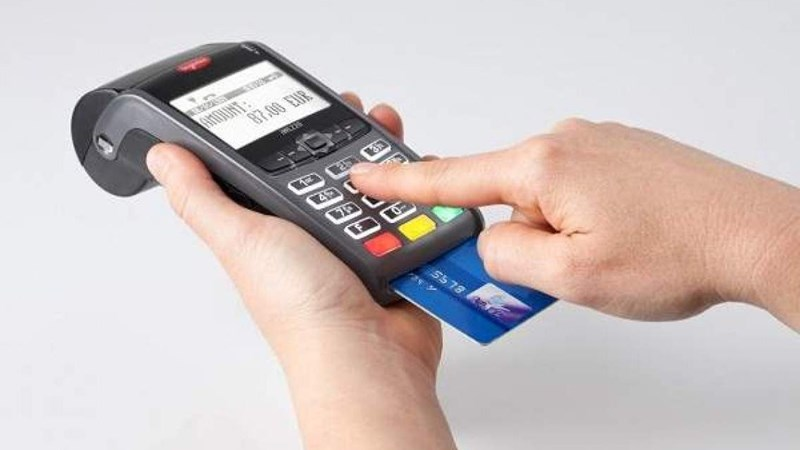
Cash withdrawal from credit cards via POS: It’s illegal and risky
Banks need to propagate to customers that credit cards cannot be used to withdraw money through short transactions, because it is illegal. Currently, cash withdrawal services from credit cards are very popular. Accordingly, there are a number of companies that have cooperated with banks to apply the Visa card payment channel to accept payment of
Details