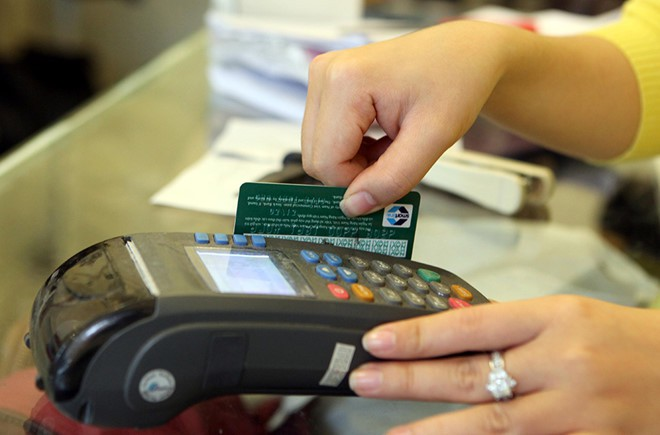
Vietnam National Payment Joint Stock Company (NAPAS) has just speeded up the roadmap to reduce money transfer fees from 47 to 100% for banks.
This is a good sign for the market but whether banks will reduce fees for customers or not is unknown.
Reducing fees, speeding up the conversion of magnetic cards to chips
From day 1.5, NAPAS reduced from 47 – 80% of switching service fees (depending on transaction type) for member banks (banks) to complete technical conditions to convert magnetic card to internal chip standard card. geography.
According to NAPAS, this is to assist banks in fulfilling the goal of converting 25 million ATM cards, 150,000 POS machines and 6,000 ATMs by the end of 2019 according to the roadmap for converting magnetic cards to domestic chip standard cards of the State Bank. . In addition, from October 1, NAPAS will make a further 25% reduction of switching service fees for member banks deploying to connect with NAPAS’s electronic retail clearing system (ACH).
“In principle, when NAPAS reduces the fee for the bank, the bank must reduce the corresponding fee for the customer.”
Dr. Nguyen Tri Hieu, Board Advisor, National Citizen Commercial Joint Stock Bank (NCB)
Previously, on March 1, NAPAS reduced 100% of switching service fees (the fee is equal to 0 VND) depending on the type of transaction for network owners accepting card payment (ATM, POS …) , 2 years earlier than originally scheduled. A year ago, NAPAS reduced its switching service fee by 25%.
According to NAPAS, the fee reduction roadmap was built and implemented in 2018, the fee for issuing banks decreased from VND 500 to VND 350 (on March 1, 2018), to VND 200 in January 1.3, 2019, to VND 50 in 1.3. .2020 and to 0 dong on 1.3.2021
However, NAPAS reduced the fee to 0% 2 years earlier than the schedule proposed to support and accompany 48 member banks to reduce input costs to reduce lending rates, stimulate credit, create conditions for banks to formulate a reasonable service fee policy for customers, encourage customers to experience and use more and more non-cash payment services, accelerate the process of non-payment. cash to ensure the implementation of the Government’s scheme on developing non-cash payment in the 2016-2020 period.
If you look at the fee of 50 – 500 VND / transaction, it is not significant, but due to the increasing amount of transactions through NAPAS over the past years, the implementation of the roadmap earlier has made NAPAS reduce the average revenue of about 50 billion VND. VND / year. The total number of transactions made via the NAPAS system in 2017 was about 267 million transactions (up 24% compared to 2016) with a total transaction value of about 656,000 billion VND (an increase of 102% compared to 2016). Through 2018, the total value of transactions increased to 388.9 million with a sudden increase in the transaction value to VND 1,763 million, up 2.3 times in the number of transactions and more than 50 times in terms of transaction value. with 2015.
In particular, the total value of transactions made via NAPAS 24/7 inter-bank transfer system increased by 4 times the total value of cash withdrawals at the inter-bank ATM network. This fellow
This means reducing the cash supply at ATMs, helping to change people’s cash usage habits. According to the 2019 plan, the NAPAS system is expected to handle more than 500 million transactions with a total value of VND 2,738 million.
Banks need to reduce fees
Recently, many banks have launched programs to reduce ATM withdrawal fees, transfer fees such as VIB reduced these two types of fees for new customers within 6 months; Techcombank free electronic money transfer; Vietcombank is free of charge for transferring money to customers who meet some conditions such as total balance of term deposits or demand deposits from VND 2 billion or more, total outstanding loans in group 1 debt of VND 3 billion or more, owners Platinum credit cards have an annual spending of VND 150 million or more …
However, according to some banks, NAPAS has reduced fees but banks, especially banks investing in many ATMs and POSs, still have difficulty reducing fees simultaneously for customers. Because on average, each transaction at ATM today, the bank has to pay about 8,000 VND, while customers only collect from 1,000 VND / cash withdrawal transaction (excluding VAT 10%) at ATMs of the same system. and other banking system is 3,000 VND / transaction. Therefore, NAPAS reduced fees only help banks offset some losses in this activity but it is difficult to have a race to reduce withdrawals and transfer fees on a large scale.
Disagreeing with this argument, Dr. Nguyen Tri Hieu, Advisor of the National People’s Commercial Joint Stock Bank (NCB), said that this calculation is that banks did not “play well” with customers. “In principle, when NAPAS reduces fees for banks, banks must reduce fees accordingly for customers,” Mr. Hieu said. Recognizing that NAPAS fee is only one of the four components that make up the fee for cash withdrawal and money transfer services that customers incur, there are many types of fees related to ATM activities such as investment fees (buying machines, equipment, software, training, human resources …), standing fees (maintenance …), liquidity but Mr. Hieu said that the amount of money customers have on their card accounts has very low interest rates, Banks still lend money with higher interest rates, so in fact, ATM withdrawal fee is less than VND 8,000 / transaction. Banks should calculate on the overall to reduce fees for customers.
Source: https://vietnambiz.vn/ap-luc-chuyen-doi-the-tu-sang-the-chip-20190430085748085.htm
Other News
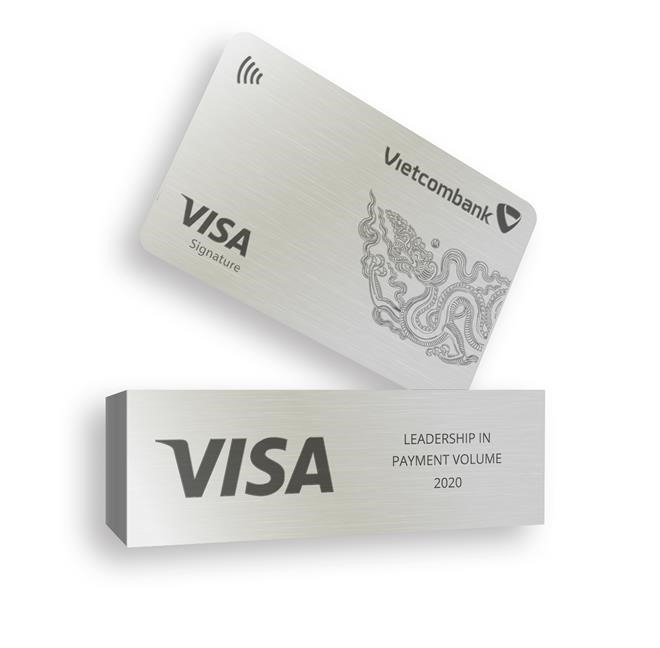
A bold imprint on Vietcombank card service in 2020
The fact that Visa simultaneously awarded 4 prizes for spending and card payment to Vietcombank once again affirms the quality of card services in particular and Vietcombank’s retail products in general in 2020. As Lao Dong reported, the Visa international card organization has just awarded 4 important award categories in 2020 to the Joint Stock
Details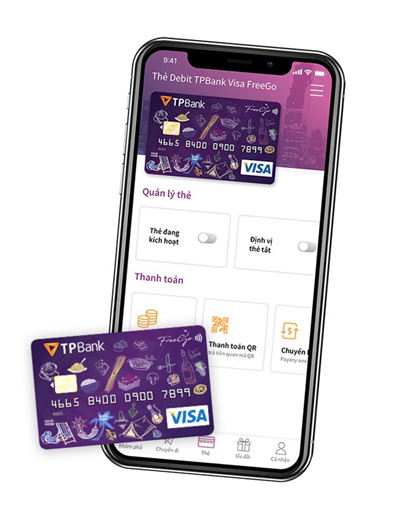
TPBank pioneered the application of digital technology to card products
Possessing a variety of security authentication methods to ensure safe, fast transactions, streamlined processing, etc., TPBank is affirming its leading position in the digital card trend in the Vietnamese card market. Electronic PIN, 3D Secure authentication method or contactless payment feature are digital technologies applied by Tien Phong Commercial Joint Stock Bank (TPBank) several years
Details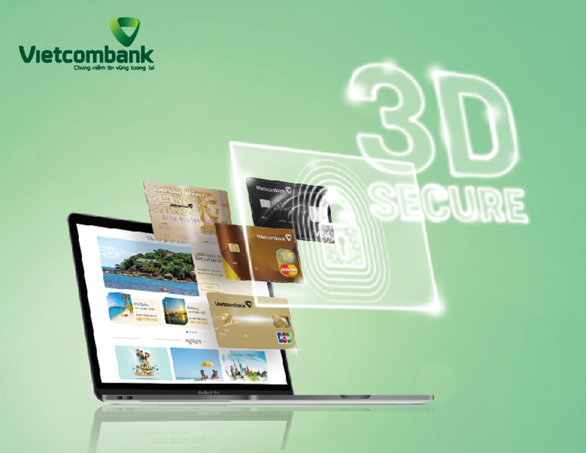
VIETCOMBANK LAUNCHED SECURE 3D SECURITY FOR INTERNATIONAL DEBIT CARD
In order to enhance the security when paying online by card, from October 1, 2019, Vietcombank officially implemented the 3D Secure security feature for international debit cards. So far, Vietcombank has implemented 3D Secure for all international credit and debit card products bearing the Visa / Mastercard / Amex / JCB brands issued by Vietcombank.
Details
Cash withdrawal from credit cards via POS: It’s illegal and risky
Banks need to propagate to customers that credit cards cannot be used to withdraw money through short transactions, because it is illegal. Currently, cash withdrawal services from credit cards are very popular. Accordingly, there are a number of companies that have cooperated with banks to apply the Visa card payment channel to accept payment of
Details
“Chiping” to limit risks
Upgrading the card issuing system will have to go along with the upgrade of the switching system. Banks have to invest more, but they have to accept because this is an indispensable demand, in line with the general trend of countries around the world, contributing to ensuring security, safety, information security, preventing prevent frauds in
Details
Customers are about to use 4 exciting enhancements to credit card services in 2020
Customers who have a habit of swiping their credit cards will probably be excited from now on because four new enhancements are applied to save time on manipulation and reduce information theft by scammers. Credit cards have come a long way since the first version was released in 1950. After 70 years, credit cards have
Details