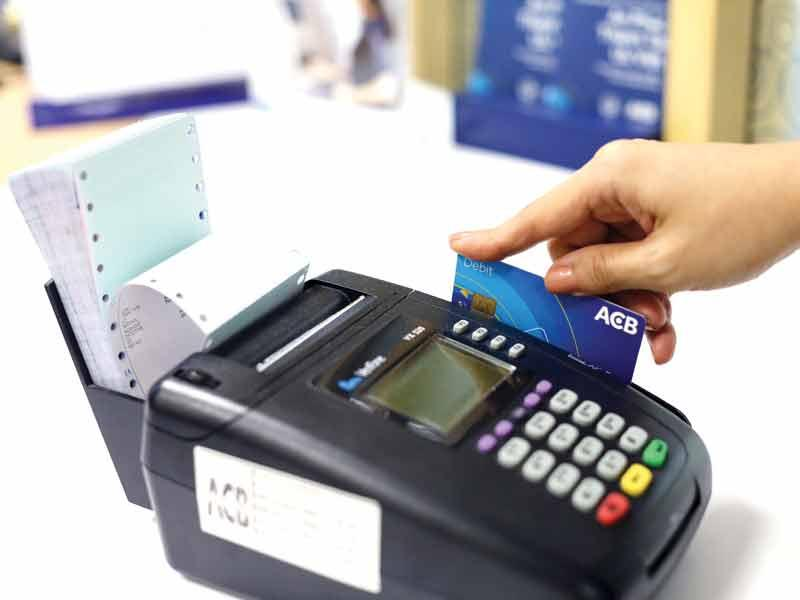
The State Bank of Vietnam (SBV) instructs commercial banks to convert magnetic cards to chip cards from now to 2020.
Risk reduction
SBV Deputy Governor Nguyen Kim Anh said that the conversion to chip cards is an indispensable trend of countries in the region and the world in the face of increasing high technology crime. The conversion must ensure the card operation continues, is stable and safe, and ensures the legitimate rights and interests of cardholders during the conversion process. The conversion of a magnetic card to a chip is considered necessary, because in the past, there have been a number of cases where customers lost money in their accounts, causing confusion in the public’s safety and security.
Mr. Dao Minh Tuan, Chairman of Vietnam Bank Card Association, said that the recent risks are mainly related to electronic banking services, especially ATM card withdrawals.
Vietnam now has 48 domestic card issuers with about 76 million cards, more than 261,000 POS and 18,600 ATMs. Most POS have followed the EMV standard, so this conversion is considered to not affect the payment transactions of users.
According to the plan, by the end of 2019, commercial banks will have to convert at least 30% of the number of cards from domestic, 35% of the number of ATMs and 50% of the number of existing POS to contact chip technology. and no contact. By the end of 2020, all ATM and POS machines on the market must ensure compliance with VCCS Standards (chip card standards set).
On May 28, 2019, 7 banks were ready to deploy chip cards and announced their debut in the first round, including: Vietcombank, BIDV, VietinBank, Agribank, TPBank, Sacombank, ABBank. These are also banks holding about 70% of Vietnam’s domestic card market share. According to Mr. Pham Tien Dung, Head of Payment Department (SBV), in addition to limiting the risk of information theft and forgery as with previous cards, chip cards also have the ability to store large information and can help. Vietnam applies to other fields (insurance, transportation, payment of public services …) as in some developed countries.
What is the conversion cost?
Leaders of banks involved in the conversion to chip cards in the first phase said it would be free for customers to convert. According to calculations, the cost of converting a magnetic card to a chip card is 1-2 USD. Bank leaders said that the difficulty lies not in the cost to buy billet cards, but in whether the technology systems of each bank are ready to meet or not.
TPBank representative said that although the conversion cost is quite large when the cost of chip embryos is 7-8 times higher than that of magnetic cards, but with the orientation of digital banks, convenient services, ensuring stability for customers. During the transaction process, TPBank considers to be harmonious, there may be some free programs for old customers in the early stages of conversion. According to TPBank, this is the right and necessary investment for the Bank to better serve its customers.
TPBank representative also said that using this domestic chip card, customers can use the card’s services as usual. Customers using old cards can use the card normally until they receive a new conversion card.
Meanwhile, according to Mr. Tran Cong Quynh Lan, Deputy General Director of VietinBank, at present, the chip card has not been used to its full potential. The capacity of the chip card is very large, but it is mainly used by the banking industry. In the future, Mr. Lan expects more public services and utilities will be integrated into this chip card.
Ms. Nguyen Tu Anh, Chairman of Napas Board of Directors – the unit assigned by the SBV to support this conversion, said that Napas has implemented a policy of reducing switching service fees up to 80% for banks to complete the conditions. convert. Napas confirmed that its human resources and technology are ready to support banks.
Converting domestic payment cards from magnetic cards to chip cards is one of the key solutions of the banking industry approved by the Prime Minister in the Project on developing non-cash payment for the period 2016-2020.
The opinion of the SBV is that customers do not have to bear the cost of card conversion and issuing organizations will be responsible for the costs incurred during the card conversion process.
Other News

The State Bank supports the promotion of digital transformation in banking activities
The fourth industrial revolution with the interplay of digital – physical – biological technologies has a huge impact and exponentially developed, can completely change the way people live. , work, run society and are strongly impacting the development policies of nations. Against this backdrop, the banking industry faces significant opportunities and challenges, requiring a transition
Details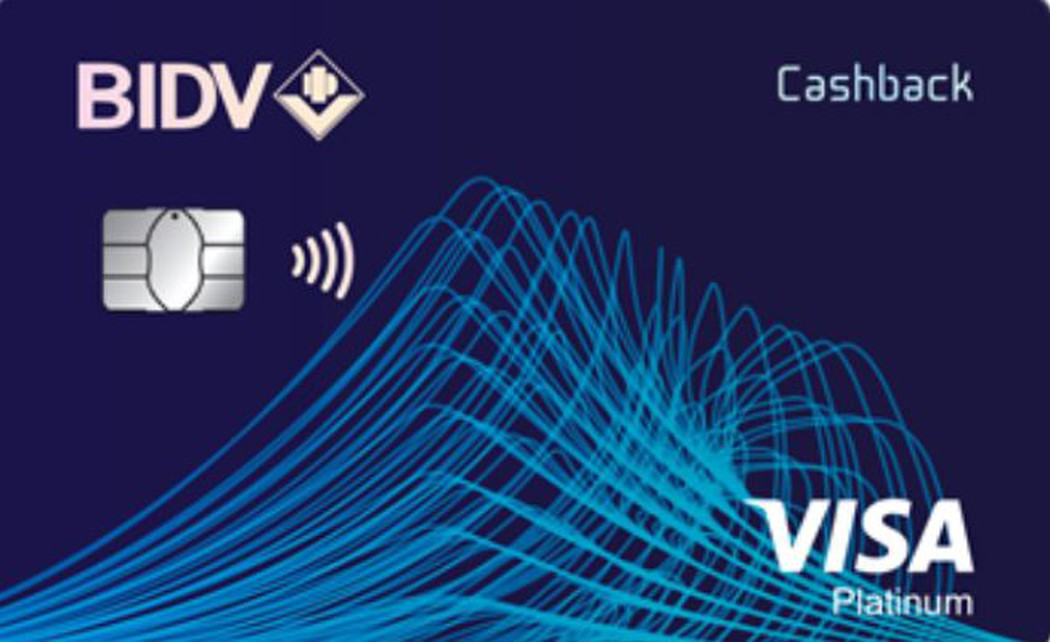
Payment trends Contactless card to the throne
With many utilities and high security, contactless cards (contactless cards) are forecast to be the payment trend in the near future, especially in the context of COVID-19 epidemic situation is complicated and concerns. about spreading the disease when using cash The World Health Organization (WHO) recommends using contactless payment – contactless or using smartphone applications
Details
“Electronic payment helps fight money laundering and anti-corruption”
“Electronic payment helps fight money laundering and anti-corruption” That is the affirmation of Deputy Prime Minister Vu Duc Dam in the Forum of developing electronic payment ecosystem in 2019 with the theme “Moving with chip technology” by the State Bank, National Payment Joint Stock Company. Vietnam (Napas) and Vietnam Economic Times have just organized. According
Details Two years from the end of converting chip card, Vietnam is a low point in the world?
Will Vietnam be lagging behind the world when it is not until 2 years before completing the conversion to chip cards, while countries in the world have been put into use for a long time? “Definitely costly.” Speaking at the Forum of development of electronic payment ecosystem 2019 with the theme “Moving with chip technology”
Details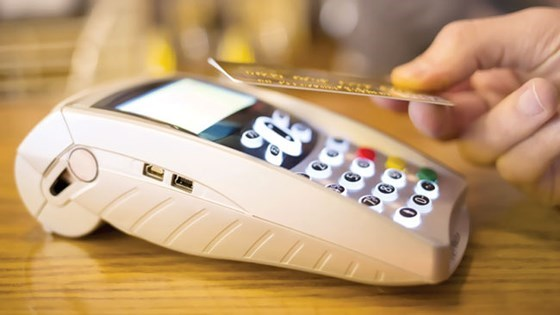
Payment contactless
Contactless (contactless) by waving, tapping on the POS machine to pay, is a trend of non-cash payment is being used by many people, in addition to local swipe cards, international cards and Payment by QR code via mobile devices. This form is well received not only for its style and convenience, but also for its
Details
From 2020, does the social insurance book no longer exist?
The social insurance book has been familiar to employees for a long time, is a book that records the employees’ participation in social insurance and is also a “proof” for them to enjoy all the prescribed regimes. specified. However, it is possible that this book will no longer exist. One of the important changes in
Details