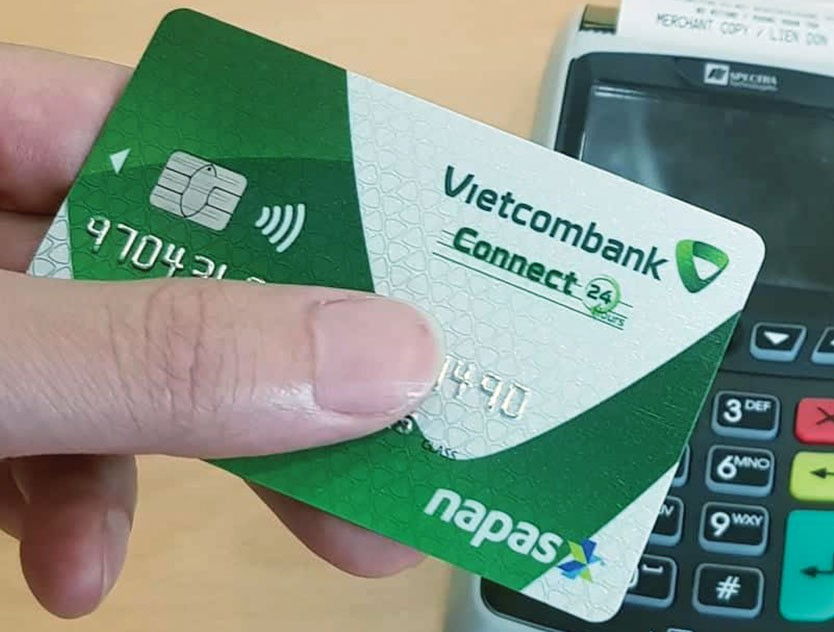
That is the affirmation of Ms. Nguyen Tu Anh, Chairman of the Vietnam National Payment Joint Stock Company (Napas) with the Securities Investment Review.
There is an opinion that the card development speed will slow down due to the emergence of new electronic ecosystems, what do you think about this?
According to statistics of the Asia Pacific Smart Card Association (APSCA), it is predicted that by 2020, the card development rate in the region and in the world will continue to grow well, at 40%.
The electronic payment ecosystem is growing strongly with the presence of many new electronic payment methods, especially QR Code.
These new payment methods are completely applicable to Vietnam market and I believe that these methods will grow rapidly in the near future, but the card is still the main means of payment.
The hot story is the conversion of domestic payment cards from magnetic cards to CHIP cards, one of the key solutions of the banking industry approved by the Prime Minister in the scheme to develop non-cash payment. 2016-2020 period (Decision 2545 / QD-TTg). In this story, how can you share what steps Napas has taken?
Ms. Nguyen Tu Anh.
Following the Prime Minister’s instructions, based on the current laws and regulations on standards and technical regulations, on October 5, 2018, the Governor of the State Bank signed Decision No. 1927 / QD- The SBV announced a set of basic standards for domestic CHIP cards; It details the technical requirements for domestic payment cards in Vietnam using contactless and contactless CHIP technology, compatible with international EMV standards.
The Governor of the State Bank of Vietnam issued Circular No. 41/2018 / TT-NHNN dated December 28, 2018, on the roadmap for converting bank cards to cards that comply with the base standard of internal CHIP cards. geography.
Accordingly, the conversion schedule for card payment organizations is until December 31, 2020 and for card issuers as of December 31, 2021. This means that the entire Vietnamese market will be converted from CHIP cards to CHIP by the end of 2021.
On Napas’s side, we are ready for human resources and technology to assist banks in upgrading the domestic CHIP card payment and issuance system.
To date, Napas has implemented the VCCS domestic CHIP card compliance standard for 21 banks.
We will continue to carry out compliance with the VCCS domestic CHIP card standard according to the plan that banks have registered with Napas.
In addition, in order to support the development of the market, Napas has also issued a letter of certification to meet the VCCS standards for white card products of 6 card suppliers and 4 equipment suppliers for the banking community to have get many best choices when converting cards and expanding the network of card acceptance units of their bank.
In addition, in order to support banks in the conversion process, aiming to convert domestic CHIP cards according to the schedule of the State Bank, Napas has implemented a policy of reducing switching service fees up to 80%. (depending on the type of transaction) for banks to complete the technical conditions to convert a magnetic card to the local chip card standard.
Are you worried the conversion will not go according to plan?
According to the EMVCo data as of December 31, 2018, CHIP card conversion rates in Europe, Africa and the Middle East, Canada, Latin America and the Caribbean countries account for about 80-87%, the Americas is 60.7%, Asia is 51% and Vietnam is not too lagging behind the world.
Switching from a magnetic card to a CHIP card in Vietnam in the next 2 years has a lot of work to do and will create more room for cooperation with other economic sectors to develop together.
Currently, Napas and banks are promoting the conversion from magnetic to CHIP cards to customers.
At the end of May 2019, only 7 commercial banks including Vietcombank, VietinBank, Sacombank, ABBank, TPBank, BIDV and Agribank completed the system authentication to convert cards, so far, the number of banks has increased. number 21 and in 2020, banks will continue to promote stronger transformation.
Banks have completed system authentication for card conversion, which accounts for 70% of the number of magnetic cards on the market. This shows that the conversion from magnetic card to CHIP card is being “racing” by banks to meet the State Bank’s set roadmap.
Converting CHIP card, the story is said not only the responsibility of the banking industry. What is your opinion?
At the Forum of Developing Electronic Payment Ecosystems: Moving with CHIP technology in the middle of December 2019, Deputy Prime Minister Vu Duc Dam directed the urgency of the conversion of internal CHIP cards. In addition, the bank has expanded its network and social responsibility to expand the network of CHIP card acceptance, actively implementing the conversion in accordance with the State Bank’s schedule so that Vietnam can catch up with the trend. The global economy, taking advantage of the development of digital economy to promote electronic payment and aims that most Vietnamese people will use CHIP cards to pay for their daily necessities.
According to the Deputy Prime Minister, the story of CHIP card application is not only a matter of the banking industry, credit institutions, but also requires the coordination of regulatory agencies, ministries and businesses, and must have Specific and practical actions are also the tasks of the media industry.
CHIP card is a multi-application card, on which, in addition to payment applications, financial services, can be connected with other economic sectors such as transportation, health insurance, social insurance …
In particular, the story of acceptance network expansion is a very big story for the entire market, requiring change and investment. This is the responsibility of the banking industry and the community in the country.
Also according to the share of Deputy Prime Minister Vu Duc Dam, “The transformation is definitely expensive, but if the expense is good for the country, good for society, in the long run, it will make up for the economy. worth.
More importantly, it is the social responsibility of enterprises and banks ”.
Let us look at the investment in CHIP card development for a long time, investment for the future, so we hope that the banks and Napas under the direction of the State Bank will have a good and real acceptance network. the connection with other ministries, agencies and agencies in the coming time.
We also hope that, in the near future, if the Government licenses mobile phones (Mobile Money) to work, this currency will also be used on contactless VCCS technology platform.
Thus, based on the connection of technical standards with the banking industry, Mobile Money can take advantage of the electronic payment ecosystem that has been built and developed by the banking industry for many years.
Accordingly, all Vietnamese people will be entitled to a comprehensive financial program, meaning that the poor and rural areas will also be able to use banking and financial services for payment.
The digitization journey in the Vietnamese financial and banking system is taking place very drastically. About this story at Napas, what will you say?
To move from words to actions, Napas has made preparations in the construction of digital payment infrastructure, contributing to the promotion of cashless payment, improving the cash consumption habit of the people. during the past.
As an infrastructure provider, Napas has been and will continue to create a “highway” for smooth and secure digital payment transactions.
A closer target, can you share more about Napas’ market support plan in 2020?
This year, Napas plans to work with the Vietnam Bank Card Association to develop and propose a new fee structure for transactions, including ATM, POS and e-commerce transactions. The new fee structure aims to support banks with a good network, support small payment transactions, and create convenience for everyone.
In particular, for online public service payment transactions, within the next 3 years, Napas will persuade banks to bring public service fees to zero, and implement incentive payment services. public service to support the market, contributing to the successful implementation of the Government’s Resolution No. 02 / NQ-CP of January 1, 2019, on continuing to implement major solutions to improve the business environment and improve National competitiveness in 2019 and orientation to 2021.
(Source: Securities Investment Review)
Other News

Opportunities to promote universal cashless payment
Before the event of online payment epidemic, it proved the advantage and this is an “opportunity” to develop non-cash payment methods. Does Vietnam take advantage of this opportunity or miss it? Special opportunity According to Minister of Information and Communications Nguyen Manh Hung, the Covid-19 translation is posing a great challenge for the country, because
Details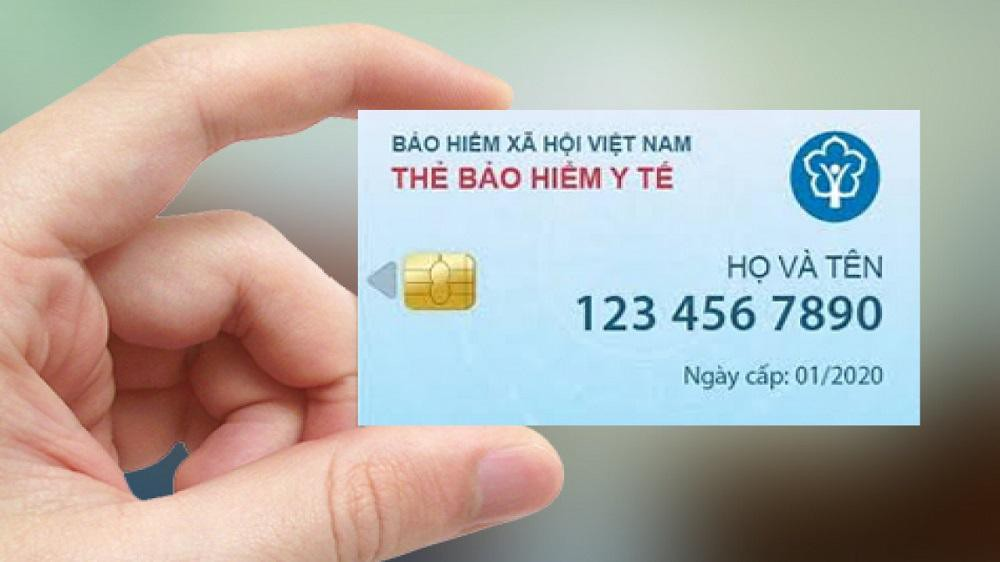
What’s new in 2020 health insurance card?
As previously reported, from January 1, 2020, the social insurance agency issues an electronic health insurance card for participants. So, what are the characteristics of this card? Electronic health insurance card with facial recognition By January 1, 2020, the social insurance agency must issue electronic health insurance cards to the participants of health insurance. At
Details
Converting magnetic card to chip card: Increasing security and safety when using the card
Under the direction of the State Bank, Vietnam Bank Card Association (VBCA) in collaboration with Vietnam National Payment Corporation (NAPAS) officially launched domestic chip card products. The Securities Investment Newspaper had an interview with Mr. Tran Cong Quynh Lan, Deputy General Director of VietinBank, one of the first 7 banks to deploy this event. Switch
Details
Accept ‘team’ cost for customer experience using chip card
At the request of the State Bank of Vietnam (SBV), by the end of 2019, at least 30% of ATM cards and 50% of POS devices at points of sale in circulation throughout the country must comply with the standards. base on domestic chip card standard. However, the biggest problem with banks when switching from
Details
Customers are about to use 4 exciting enhancements to credit card services in 2020
Customers who have a habit of swiping their credit cards will probably be excited from now on because four new enhancements are applied to save time on manipulation and reduce information theft by scammers. Credit cards have come a long way since the first version was released in 1950. After 70 years, credit cards have
Details
No contact: Future banking trends
Vietnam has 41 banks with the current number of magnetic cards at about 75 million; nearly 280,000 POS machines – most of them have complied with the Chip Card Standard (EMV) and the upgrade to support the local chip card standard is not too complicated. Safety, security, multi utilities According to EMVCo data, as of
Details