The fourth industrial revolution with the interplay of digital – physical – biological technologies has a huge impact and exponentially developed, can completely change the way people live. , work, run society and are strongly impacting the development policies of nations.
Against this backdrop, the banking industry faces significant opportunities and challenges, requiring a transition to a new business model, integrating technology in operations and digitizing business processes in an automated manner. , smart to enable banks to conduct business, provide products and services easily on a digital platform, effectively exploit data to increase experience and engage customers.
In the process of digital transformation, digital banking development has become an indispensable need to help banks overcome challenges, create competitive advantages, actively adapt and sustainably develop in the context of industrial revolution 4.0 and the rise of digital economy.
Vietnam has many favorable conditions for the development of digital banking thanks to its large population of 96 million people, golden population structure (56 million people participating in the labor market); The percentage of people owning a smartphone is high (72%); 62 million 3G / 4G subscribers connected to the Internet, young people love technology …
Vietnamese banks are well aware of the importance of digital banking transformation and in fact, they have been actively researching new technologies for business application in the past, initially recording results. certain.
Many banks have researched and implemented the first digital transformation strategy with IoT applications that allow customers to access and use banking services, connecting to other digital ecosystems on the Internet platform (banking services). Timo number of VPBank, Live Bank of TPBank, E-Zone of BIDV …), or provide banking services through applications installed right on mobile phones (Mobile Banking), customers have be able to use many features and utilities than face-to-face meetings at the counter …
Vietnamese banks are well aware of the importance of digital transformation.
According to PwC’s 2019 Global Consumer Survey for 27 countries / territories, Vietnam is the fastest growing market for mobile payments in 2019, the percentage of consumers paying by mobile in Vietnam Males have increased to 61%, from 37% in 2018.
Some banks have initially applied artificial intelligence (AI), robots and big data (BigData) in collecting, analyzing, forecasting the market to formulate business plans and strategies, as well as analyzing data. analyzing customer data to support the evaluation, customer classification and decision on disbursement, lending to shorten the time from many days to days …
In the spirit of promoting innovation, being customer-focused and timely capturing and making effective use of powerful applications of advanced achievements of the 4.0 revolution, the State Bank assisted to promote Digital transformation in banking operations through some of the following main orientations:
Firstly, perfecting the mechanisms, policies and legal framework in banking activities to adapt to the 4.0 revolution, facilitating and promoting business models and governance in the banking sector in the direction of breakthroughs, innovations, but still attaching importance to ensuring network security and protecting consumers’ interests in order to limit risks and challenges in the context of digital technology boom;
Secondly, to build and develop technological infrastructure in a synchronous, focused, unified manner, capable of integrating and connecting with other industries and fields to provide banking products and services on digital platform, improve service quality and increase utility and experience for customers;
Thirdly, to prioritize investment, strongly apply the technologies of the 4.0 revolution to banking activities; Prioritizing the development of digital banking model, in which digital payment is used as a gateway to connect seamlessly with other banking services such as mobilization, lending, investment, insurance … and convenient communication with external digital ecosystems to provide safe, convenient, personalized products and services with reasonable cost and clarity.
Fourthly, considering quality human resources of banks is a decisive factor in the success in transforming banks and developing digital banks in Vietnam; focus on training, retraining, improving the quality of human resources in the banking industry, helping banking workers equipped with skills, developing capacity to adapt to the context of 4.0.
Regarding implementation measures, in the coming time, the State Bank will give priority to focus on the following specific tasks:
Firstly, to research and develop a legal framework to facilitate the supply of digital banking products and services through the development of a Decree replacing the Government’s Decree No. 101/2012 / ND-CP on non-cash payments to support and facilitate the development of electronic payment; submit to the Prime Minister the Proposal on the mechanism of management of financial technology activities in the banking sector (Regulatory Sandbox) …
Secondly, to build and develop technological infrastructure, first of all electronic payment infrastructure with the upgrade of the interbank electronic payment system towards centralization and promotion of official operation of the system. Automatic clearing system for retail transactions (ACH) operating 24/7, real-time payment processing (real-time).
Thirdly, implementing QR Code payment standards, chip card standards to enhance connectivity and connection between payment service providers, payment intermediaries and security payment services. safe, convenient, closely integrated with other sectors and fields.
Fourthly, continue researching and applying modern technology to continue designing and deploying banking products and services with the main orientation of providing products and services on smartphone applications with safety, convenience and increased experience for customers.
Excerpts from the speech of Mr. Nguyen Kim Anh, Deputy Governor of the State Bank, Head of the Fintech Steering Committee at the seminar “Smart Banking: Promoting digital transformation in the banking sector” within the Forum High level and International Exhibition on Industry 4.0 (Industry 4.0 Summit 2019)
Other News

Convert chip cards like … running track and field at SEA Games 30
Vietnamese banks are starting to race to convert magnetic cards into chip cards. This transformation not only fulfills the requirement of the State Bank to be completed in 2020, but also to dominate customers, which are changing daily consumption habits. Swipe cards are about to become outdated, “one touch” is the trend Speaking at the
Details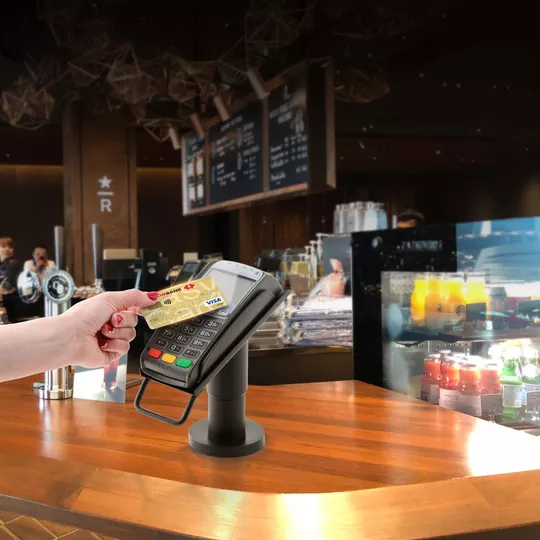
Thanh toán không dùng tiền mặt: giảm rủi ro, phòng dịch Covid-19
Ngay đầu năm 2020, Thống đốc Ngân hàng Nhà nước (NHNN) đã ban hành Chỉ thị số 01/CT-NHNN yêu cầu ngành ngân hàng phải đẩy mạnh thanh toán không dùng tiền mặt, đặc biệt là thanh toán qua ngân hàng đối với các dịch vụ công Đến nay, Techcombank đang là ngân hàng (NH) thương
Details
“It’s time for Vietnam card market to be more professional.”
“The bank has not shown the abnormal handling process to convince customers. There is no organization that protects the interests of customers,” Basico’s lawyer said. The comment was shared by lawyer Tran Minh Hai, Chairman of Banking Professional Training JSC, CEO of Basico Law Company, on the sidelines of the seminar “Credit Card Market –
Details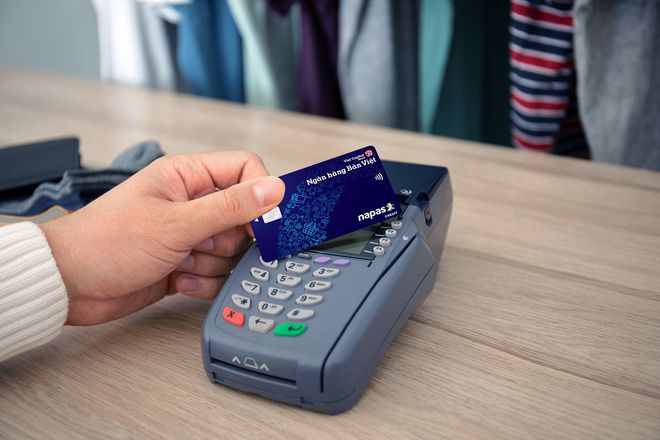
Stop issuing tape ATM cards
On March 31, credit institutions will terminate the issuance of magnetic ATM cards according to the roadmap of converting bank cards to domestic chip cards. According to the roadmap specified in Circular 22/2020 of the State Bank amending Circular 19/2016 regulating banking card operations, for card issuers from March 31st, stop issuing magnetic tape ATM
Details
Converting magnetic cards to chip cards: Increases security
The roadmap for converting a magnetic card to a domestic chip card of banks has been issued by the State Bank of Vietnam since 2018. Specifically, as of December 31, 2019, at least 30% of domestic cards issued by payment service-providing organizations must be converted into chip cards; By December 31, 2016, 100% of chip
Details
In order not to lose money on ATM cards
Convert from ATM technology card to chip card to minimize the risk of losing money Despite repeated alerts, a series of cases of attaching device to steal card information (skimming) at ATMs, cheating users to get passwords, OTP codes and then taking money still occurred. Banks (banks) are urgently responding to card technology crimes. Sophisticated
Details