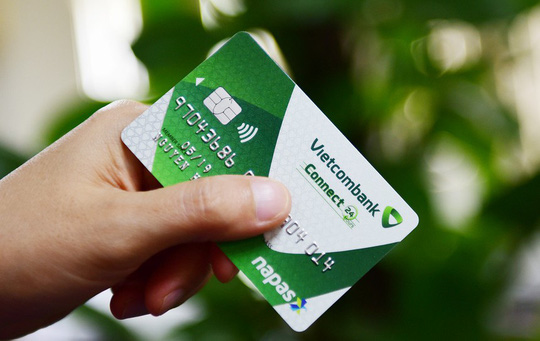
Joint Stock Commercial Bank for Foreign Trade of Vietnam (Vietcombank) said that the bank has converted over 1 million magnetic cards to chip cards
According to Ms. Nguyen Hong Van, Director of Vietcombank Card Center, from September 2019, Vietcombank was one of the first banks to deploy new issuance and convert magnetic cards to contactless chip technology (Chip Contactless) and upgrading the system of card payment machines and ATMs throughout the system to ensure the acceptance of chip cards, meeting the requirements of the conversion roadmap of the State Bank
“To date, Vietcombank has issued and converted over 1 million Chip Contactless cards and upgraded over 50% of payment machines, nearly 70% of ATMs accept chip cards” – Ms. Van said.
Vietcombank is one of the banks with the largest number of cards and ATM system in the market, so the conversion cost is huge. However, at present, this bank is still free to convert customers from magnetic cards to chip cards to increase safety, increase convenience, shorten payment time …
Currently, Vietnam has 48 banks that have issued about 76 million magnetic cards. According to the plan, by the end of 2021, all existing magnetic cards will be converted to chips.
Deputy Governor of the State Bank of Vietnam Nguyen Kim Anh said that the conversion of magnetic card to chip is the central solution to promote cashless payment. Chip card fully meets technical factors on safety and security according to EMV International Standard, limiting risks of fraudulent fraud; serve as an important platform for integrating and applying for non-cash payment services and services for services such as health, education, transportation, insurance and public services. People pay by chip card with contactless technology for small value transactions just need to perform one touch of the card to the POS machine to complete the transaction.
Source: https://thitruong.nld.com.vn/vnmoney/hon-1-trieu-the-tu-da-chuyen-sang-the-chip-20200506101147464.htm
Other News
Electronic payment dominated
Many people opt for non-cash payments when shopping for goods or services during the time of Covid-19 outbreak. Banks scrambled to lower the floor fee for people to increase their use of electronic banking services. Change habits, psychology of people In order to promote cashless payment, the State Bank decided to exempt and reduce service
Details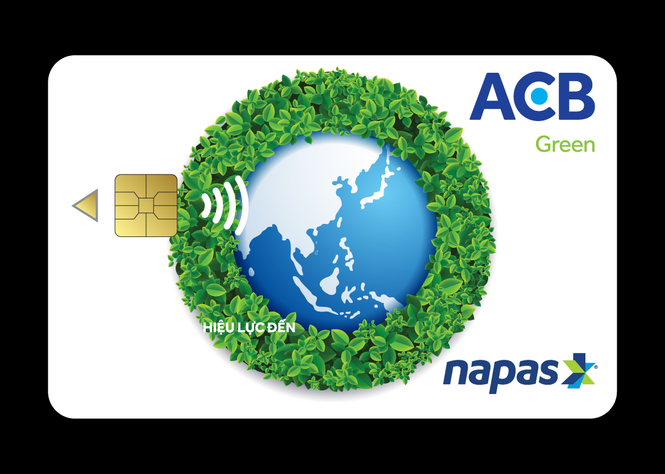
Transact safer with ACB Green domestic debit card
Catching up with the 4.0 technology trend, the ACB Green domestic debit card according to VCCS standard (Vietnamese chip card technical standard) is deployed to apply contactless technology (contactless payment) to provide a quality experience. quality for young people. Safety and high security As one of the pioneering banks to grasp the inevitable trend of
Details
Solutions in the banking sector
Along with the growth of global trade, banks and payment service providers are constantly looking for new payment solutions to meet the challenges faced by card payment acceptance points. They need to provide the best solutions in the most revolutionary sense, the easiest, safest and the best processing capacity. And even overcome these needs by
Details
In order not to lose money on ATM cards
Convert from ATM technology card to chip card to minimize the risk of losing money Despite repeated alerts, a series of cases of attaching device to steal card information (skimming) at ATMs, cheating users to get passwords, OTP codes and then taking money still occurred. Banks (banks) are urgently responding to card technology crimes. Sophisticated
Details
Accept ‘team’ cost for customer experience using chip card
At the request of the State Bank of Vietnam (SBV), by the end of 2019, at least 30% of ATM cards and 50% of POS devices at points of sale in circulation throughout the country must comply with the standards. base on domestic chip card standard. However, the biggest problem with banks when switching from
Details
“Chiping” to limit risks
Upgrading the card issuing system will have to go along with the upgrade of the switching system. Banks have to invest more, but they have to accept because this is an indispensable demand, in line with the general trend of countries around the world, contributing to ensuring security, safety, information security, preventing prevent frauds in
Details