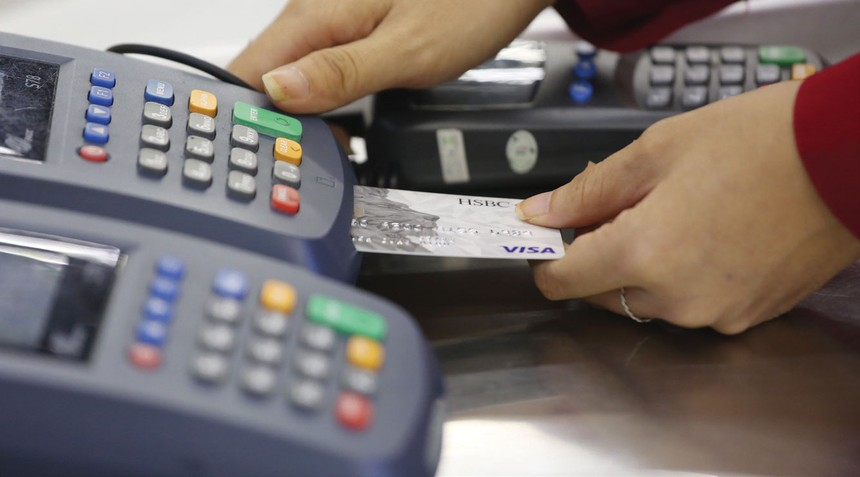
The Covid-19 epidemic caused heavy losses to production and business activities, and accordingly, the number of unemployed also increased sharply, all cautious for credit card default may not be redundant.
Fall into the “debt net” for using a credit card
NTH, a new employee at a joint-stock commercial bank in Hai Ba Trung, Hanoi, said: “I am now wasting my head because every day I open my eyes, I only think about how to have money to repay the banks.” .
H said, the card staff of a foreign bank all day invites the phone to open a credit card with many incentives such as refunds when spending, up to 50% discount when using some services … so she earlobes.
The process of using the card is only swiped, do not see the money in the wallet “leaving” so do not feel sorry, it is due to pay the new boss to spend a lot of money.
“I myself am also using the credit card of the bank I work in and the debt is quite good. Every month, when I get paid, I automatically deduct salary from the bank. The rest is just enough for my personal expenses, so when I was informed of the credit card debt payment of that foreign bank, I really didn’t know where to make money, ”H said.
Dare not to ask for family money, H decided to open a credit card of another bank to withdraw cash, pay debts from credit cards of foreign banks.
“The new staff salaries are very low, so it is not enough to cover the credit card debt and the 3 credit cards cycle of cash withdrawal – payment – cash withdrawal – payment throughout the year. Then another foreign bank has a promotion program to offer bicycles to customers to open a new credit card so the family members asked me to open the card to get the car. And then, when I ran out of money to pay for credit cards of the other three banks, I pulled money from the newly opened bank to pay the debt, ”she said.
Debts were owed on credit cards of 4 banks. Looking forward to the end of the year, she will be rewarded with a decent amount of money to pay back the debt, H will receive the notice: because the Bank is in the restructuring phase, the bonus is only symbolic.
“After returning to work after the New Year holiday, the Covid-19 pandemic appeared. Only 1 month after going to work, employees of the whole bank secretly shared with each other about the difficult business situation, so they could not exclude the plan of resignation; take turns to work – take a break; pay cut, ”H said.
Credit card opening, difficult?
In fact, not only is it not difficult but it is very easy. Just go to a bank that offers to make a credit card, immediately there will be a guide from the bank, give instructions carefully to the procedures and will have a card in a week.
Even without having to go to the bank, just call the demand notice, the bank will immediately send staff to the place to support customers with card opening procedures.
Theoretically, the card limit will depend on the work or solvency of each person, but the flexibility in increasing the card limit for customers is very simple.
Mrs. N.H.D, in Ba Dinh District, Hanoi, said that a few years ago, she opened a credit card of a bank to be given a suitcase.
Each month, she spends a few million dong on the card, even though the card has a limit of up to 50 million / month. Yet the bank employee still called to ask if she wanted to raise the limit to 80 million / month.
“At the time of the epidemic now, using a card feels more secure than spending cash, but I do not spend up to 20 million VND / month but need to raise the limit to 80 million / month”, Mrs. D said.
Notably, on December 25, 2019, the State Bank of Vietnam (SBV) issued Circular 28/2019 / TT-NHNN, amending Circular 19/2016 / TT-NHNN on bank card activities. The goods will take effect from April 1, 2020.
The Circular clearly states that for secondary cardholders who are from 15 to under 18 years old do not lose or have limited civil act capacity, they can use debit cards, credit cards and prepaid cards without need the written consent of the legal representative as old regulations.
In fact, the number of customers spending on credit cards dripping like Mrs. N.H.D is not rare, but the number of young customers caught up in the spiral of prepaid spending is also small.
According to economic experts, gradually the cardholders may fall into the “debt net” due to excessive use of credit cards and at some point will become “credit card slaves” or default.
According to the State Bank of Card data, by the end of 2018, the number of cards in circulation reached 97 million cards (an increase of 8.3% compared to the end of 2017) and in 2019, there were 99 million cards active. .
And lessons need to be cautious
After the Asian financial crisis of 1997 – 1998, the Korean government encouraged banks to issue as many credit cards as possible to boost consumption.
By 2002, the number of cards in circulation increased by 2.7 times, to 105 million. When the card crisis hit, an average adult in South Korea had 4.6 credit cards and debt burden of up to $ 100 billion.
At the 2003 credit card crisis, millions of people defaulted and the Bank of Korea (BoK) was forced to pump money into the bond market. However, the Korean people are accustomed to spending aggressively so they cannot become momentary.
In China, where the Covid-19 epidemic took many lives and caused serious losses to production and business activities in the first months of 2020, overdue credit debts in February increased by about 50. % compared with the same period last year.
Qudian Inc, a Beijing-based online lending company, said the maturity limit for payment increased to 20% in February from 13% at the end of last year.
China Merchants Bank Co., one of China’s largest consumer credit companies, announced it was forced to “suspend” loans with credit cards after overdue loans increased rapidly. An estimated 8 million Chinese people were unemployed in February 2020.
In Vietnam, the Ministry of Labor, War Invalids and Social Affairs has just published the latest report on labor and employment situation affected by Covid-19. Accordingly, the number of people applying for unemployment insurance as of February 2020 is 47,164, an increase of 70% over the same period last year.
Talking to the Securities Investment Review, a SBV leader said that the system has not recorded any cases of default related to credit cards.
In fact, it is too early to predict the end like 2003 in Korea, but if the credit card debt remains high for a long time, it will inevitably increase the risk of financial stability.
Especially, at the present time, economists think that, in the face of the Covid-19 epidemic, credit card defaults can be a risk to the country if a global financial crisis occurs. once again.
Debt-based spending has not become a common practice for people. However, consumption trends based on “future cash flows” are gradually forming in a part of young people.
The control and issuance of cards according to personal financial ability is the right thing to do right now, limiting the situation of high card issuance, causing some banks to loosen their control and follow the number.
Source: https://tinnhanhchungkhoan.vn/ngan-hang/than-trong-lan-song-vo-no-tin-dung-ca-nhan-do-dich-covid19-320634.html-
Other News

What are the advantages of ATM technology of chip card compared to magnetic technology?
Enhancing safety, high information security, minimizing the risk of fraud, card information theft … are the outstanding advantages that chip technology cards bring. Recently, banks have been offering ATM cards based on domestic VCCS card standards, complying with EMV international standards as well as increasing communication to their customers about this conversion. Have you ever
Details
Vietnam Card Day 2020 inspires access to and experience with modern and convenient banking and payment services
“Vietnam Card Day 2020” includes a series of events, starting from November 7, 2020 in Hanoi, with the theme Arousing internal resources from the COVID-19 crisis, promoting the development of non-cash payments. . Under the content direction of the State Bank of Vietnam, ‘‘ Vietnam Card Day 2020 ’is organized by Tien Phong Newspaper and
Details
Thanh toán không dùng tiền mặt: giảm rủi ro, phòng dịch Covid-19
Ngay đầu năm 2020, Thống đốc Ngân hàng Nhà nước (NHNN) đã ban hành Chỉ thị số 01/CT-NHNN yêu cầu ngành ngân hàng phải đẩy mạnh thanh toán không dùng tiền mặt, đặc biệt là thanh toán qua ngân hàng đối với các dịch vụ công Đến nay, Techcombank đang là ngân hàng (NH) thương
Details
Vietnam will soon become a cashless country
That is the affirmation of Mr. Safdar Khan, a veteran member of Mastercard, who has just taken on the role of the Group’s head of emerging markets in Southeast Asia. According to Nikkei, in Asia, in the battle of electronic payment, Visa and Mastercard are facing many challenges when credit cards seem to be losing
Details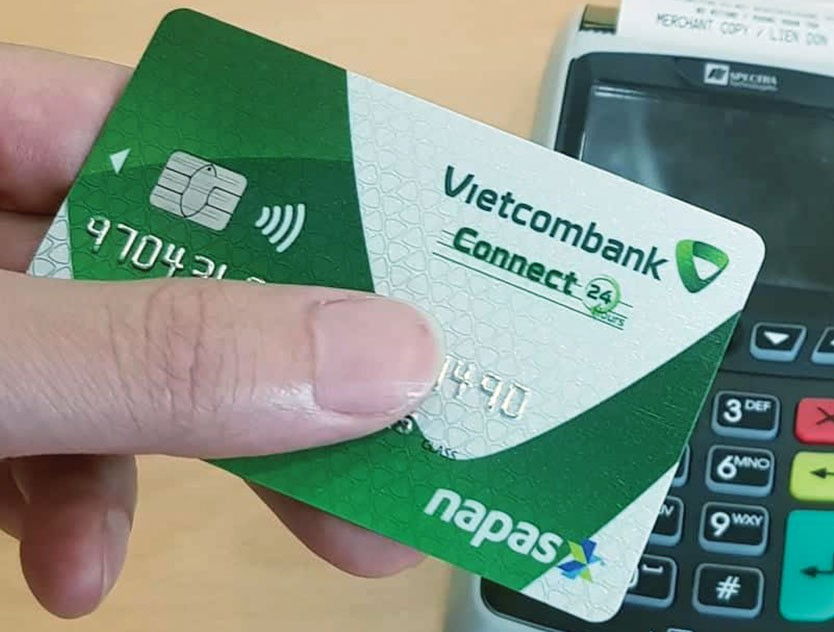
Investing in CHIP cards is an investment for the future
That is the affirmation of Ms. Nguyen Tu Anh, Chairman of the Vietnam National Payment Joint Stock Company (Napas) with the Securities Investment Review. There is an opinion that the card development speed will slow down due to the emergence of new electronic ecosystems, what do you think about this? According to statistics of the
Details Converting a magnetic card to a chip card: A new year’s goal for the banking industry
According to the goals set by the Government, by 2020, the rate of non-cash payment must account for more than 30% of the total means of payment in Vietnam. Conversion of magnetic cards to chip cards with safer security technology is a must. The conversion from magnetic stripe to chip card is being implemented by
Details