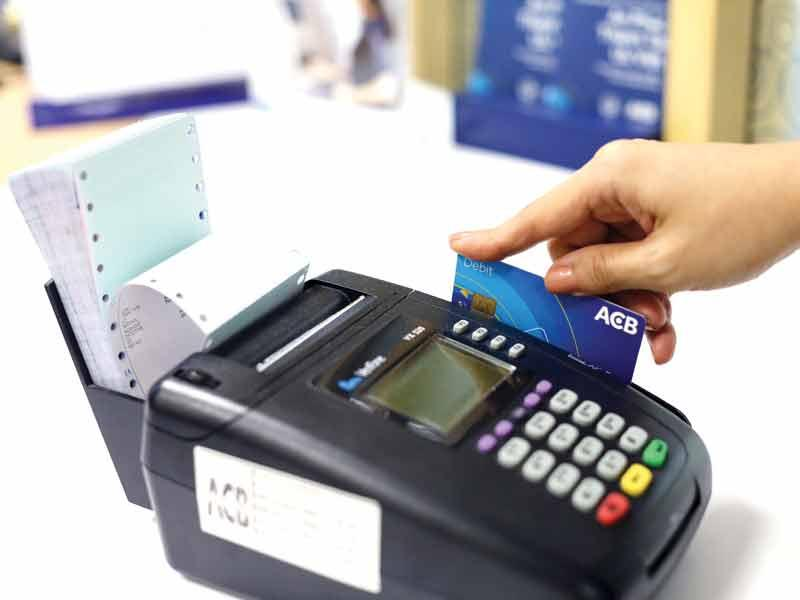
The State Bank of Vietnam (SBV) instructs commercial banks to convert magnetic cards to chip cards from now to 2020.
Risk reduction
SBV Deputy Governor Nguyen Kim Anh said that the conversion to chip cards is an indispensable trend of countries in the region and the world in the face of increasing high technology crime. The conversion must ensure the card operation continues, is stable and safe, and ensures the legitimate rights and interests of cardholders during the conversion process. The conversion of a magnetic card to a chip is considered necessary, because in the past, there have been a number of cases where customers lost money in their accounts, causing confusion in the public’s safety and security.
Mr. Dao Minh Tuan, Chairman of Vietnam Bank Card Association, said that the recent risks are mainly related to electronic banking services, especially ATM card withdrawals.
Vietnam now has 48 domestic card issuers with about 76 million cards, more than 261,000 POS and 18,600 ATMs. Most POS have followed the EMV standard, so this conversion is considered to not affect the payment transactions of users.
According to the plan, by the end of 2019, commercial banks will have to convert at least 30% of the number of cards from domestic, 35% of the number of ATMs and 50% of the number of existing POS to contact chip technology. and no contact. By the end of 2020, all ATM and POS machines on the market must ensure compliance with VCCS Standards (chip card standards set).
On May 28, 2019, 7 banks were ready to deploy chip cards and announced their debut in the first round, including: Vietcombank, BIDV, VietinBank, Agribank, TPBank, Sacombank, ABBank. These are also banks holding about 70% of Vietnam’s domestic card market share. According to Mr. Pham Tien Dung, Head of Payment Department (SBV), in addition to limiting the risk of information theft and forgery as with previous cards, chip cards also have the ability to store large information and can help. Vietnam applies to other fields (insurance, transportation, payment of public services …) as in some developed countries.
What is the conversion cost?
Leaders of banks involved in the conversion to chip cards in the first phase said it would be free for customers to convert. According to calculations, the cost of converting a magnetic card to a chip card is 1-2 USD. Bank leaders said that the difficulty lies not in the cost to buy billet cards, but in whether the technology systems of each bank are ready to meet or not.
TPBank representative said that although the conversion cost is quite large when the cost of chip embryos is 7-8 times higher than that of magnetic cards, but with the orientation of digital banks, convenient services, ensuring stability for customers. During the transaction process, TPBank considers to be harmonious, there may be some free programs for old customers in the early stages of conversion. According to TPBank, this is the right and necessary investment for the Bank to better serve its customers.
TPBank representative also said that using this domestic chip card, customers can use the card’s services as usual. Customers using old cards can use the card normally until they receive a new conversion card.
Meanwhile, according to Mr. Tran Cong Quynh Lan, Deputy General Director of VietinBank, at present, the chip card has not been used to its full potential. The capacity of the chip card is very large, but it is mainly used by the banking industry. In the future, Mr. Lan expects more public services and utilities will be integrated into this chip card.
Ms. Nguyen Tu Anh, Chairman of Napas Board of Directors – the unit assigned by the SBV to support this conversion, said that Napas has implemented a policy of reducing switching service fees up to 80% for banks to complete the conditions. convert. Napas confirmed that its human resources and technology are ready to support banks.
Converting domestic payment cards from magnetic cards to chip cards is one of the key solutions of the banking industry approved by the Prime Minister in the Project on developing non-cash payment for the period 2016-2020.
The opinion of the SBV is that customers do not have to bear the cost of card conversion and issuing organizations will be responsible for the costs incurred during the card conversion process.
Other News

TPBank soon “finished” converting domestic chip cards
TPBank is the first bank to officially complete the system conversion, allowing the issuance and acceptance of local chip cards in Vietnam. According to TPBank, the entire ATM system and mPOS plus of this bank have completed the conversion to accept domestic chip cards and contactless chip cards for customers, two years earlier than the
Details
5 Golden rules to help you use your ATM card safely
Most ATM cards in use today mainly use magnetic technology. With this technology, the card information has been hacked and changed easily … The advent of ATM has created a major breakthrough, completely changing the trading habits of Vietnamese people. Until now, the ATM card has become a familiar tool, “the object of separation” with
Details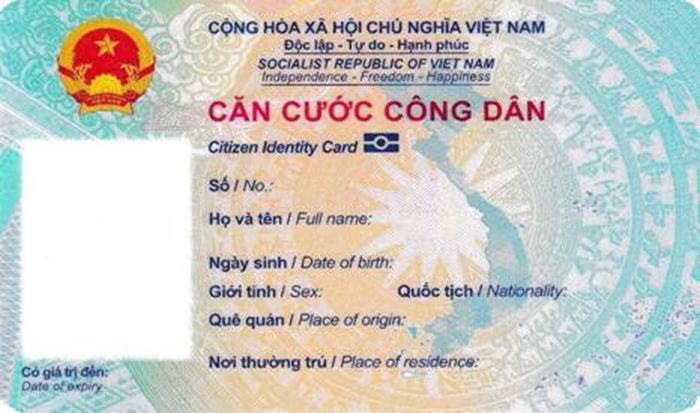
Regulations on the model of citizen’s identity card attached to electronic chips
The form of a Citizen Identification Card (CCCD) under Circular No. 06 has an electronic chip and stores basic information of citizens, with two languages in Vietnamese and English. Circular No. 06/2021 / TT-BCA on the model of citizen’s identity card (Circular 06), including 05 articles and takes effect from January 23, 2021, signed by
Details
BIOLOGICAL TECHNOLOGY: SECURITY COURSE OF BANKING IN THE FUTURE
The following article discusses IDEX Biometrics ASA’s Vice President, David Orme about the concerns of Generation Z (those born from 1995 onwards) on online banking security. and the importance of biometric technology to the younger generation. The payment ecosystem continues to grow due to the ever-increasing interest in payment methods. Today, Generation Z is considered
Details
Electronic payment: boldly move forward so as not to miss a beat
E-payment creates opportunities for people to become more involved in the banking sector, not to miss the opportunities provided by the digital economy. This is an issue exchanged by Deputy Prime Minister Vu Duc Dam in the Forum of Developing E-payment Ecosystem 2019 with the topic ‘Moving with chip technology’ by the State Bank, National
Details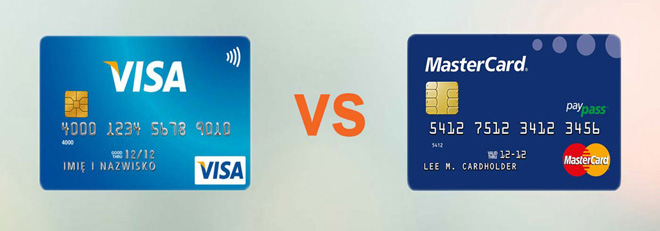
What is the difference between a Mastercard and a Visa card? What type of card should use?
Mastercard and Visa cards are two popular international payment cards lines in the world today. But what is the difference between a Mastercard and a Visa card that is so popular? Join us in the article below. 1. Differentiate Mastercard from Visa card Visa card is an international payment card issued by Visa International Service
Details