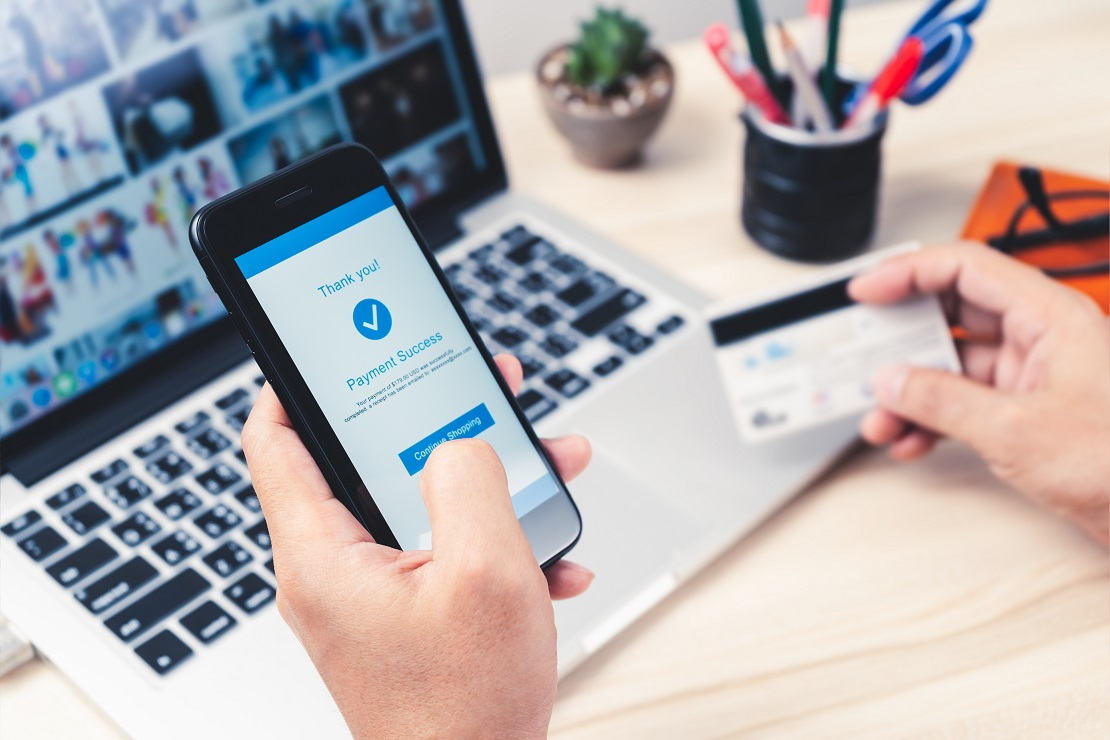
The State Bank of Vietnam (SBV) has just issued a document 6422 / NHNN-TT asking the State Bank branches in provinces and cities to perform some tasks to promote non-cash payments for public services.
The document stated, in order to implement the Government’s Resolution No. 02 / NQ-CP of January 1, 2019, on continuing to implement major solutions to improve the business environment and enhance national competitiveness. In 2019 and the orientation to 2021 and the Prime Minister’s Decision No. 241 / QD-TTg of February 23, 2018, approving the scheme to boost payment via banks for public services tax, electricity and water. , tuition fees, hospital fees and payment of social security programs (collectively referred to as public services), the Governor of the SBV requested the provincial and municipal branches to perform well the following tasks:
Proposing and proposing the People’s Committee of the province or city to issue a document directing public service-providing units in the locality (medical, educational establishments, social insurance agencies, clean water and electricity companies, administrative procedure-resolving agencies, ..) building an information technology system, application software capable of connecting to application software of banks, intermediary payment service providers for organizations and individuals to use non-cash payment method for public services.
Proposing solutions to the People’s Committee of the province and the city and coordinating with other departments, agencies and service delivery organizations in the area to apply non-cash payment options for public services, such as: : Schools, hospitals and public service providers announce their account numbers opened at banks for organizations and individuals to transfer payment for services equal to the payment services that the bank provides. supply goods (transfer money via mobile, make payment via electronic banking channels, ..); Schools, hospitals and public service providers install devices that accept cards, pay QR applications to allow parents, students, patients, residents, etc. to use mobile devices. , bank card for payment (similar to the payment of money to buy goods at stores, supermarkets); schools, hospitals and public service providers build an information technology system that records the information to be paid (amount, record code / customer, ..) for users to access. Access applications on the Internet, mobile and make payments through the utility’s payment products and services (payment via mobile devices, payment via the Internet, electronic wallets, payment services) menu, ..) similar to the payment of electricity bills, telecommunications charges … now.
At the same time, the Governor of the SBV asked the State Bank branches in the provinces and cities to direct the credit institutions in the area to study, apply reasonable payment service fee policy and deploy preferential and promotion programs. (for example: exemption and reduction of payment service fees for customers, health facilities, educational institutions, public service providers in the beginning of implementation; application of gift giving and earning programs , cashback, win lottery, etc. for customers who register for, use cashless payment services, …) to encourage public service providers and premium customers The first option is to use non-cash payment service when making payment for public service.
In addition, disseminating and timely and sufficiently informing customers about the procedures, operations and measures to ensure safety when making non-cash payment transactions in general and Non-cash payments for public services in particular.
The SBV Governor also asked the SBV branch in provinces and cities to strengthen the coordination with the media, press, credit institutions, payment intermediaries in the area to build up communication program on promoting cashless payments for public services, focusing primarily on health and education.
(Source: VGP News)
Other News

The bank changes itself in the digital race
Nam A Bank offers robots and virtual assistants to serve customers while simultaneously improving the eBanking ecosystem, providing a multi-utility experience for customers. In the context of technology development, digital banking application is an indispensable choice of banks, in order to provide safe, effective financial services to meet the diverse needs of users. This is
Details
Banks “race” to convert magnetic cards into chip cards
According to the goals set by the Government, by 2020, the rate of non-cash payment must account for more than 30% of the total means of payment in Vietnam. Conversion of magnetic cards to chip cards with safer security technology is a must. The conversion from magnetic stripe to chip card is being implemented by
Details
Thanh toán không dùng tiền mặt: giảm rủi ro, phòng dịch Covid-19
Ngay đầu năm 2020, Thống đốc Ngân hàng Nhà nước (NHNN) đã ban hành Chỉ thị số 01/CT-NHNN yêu cầu ngành ngân hàng phải đẩy mạnh thanh toán không dùng tiền mặt, đặc biệt là thanh toán qua ngân hàng đối với các dịch vụ công Đến nay, Techcombank đang là ngân hàng (NH) thương
Details
What is a Visa card? Visa cards and their benefits
Visa card (English: Visa card) is an international payment card, issued by Visa in association with domestic banks, for the purpose of withdrawing money, buying goods online or paying at Acceptance points worldwide. Visa card Concept Visa card in English is Visa card. Visa Card is an international payment card, issued by Visa in association
Details
It costs trillions to convert over 76 million ATM cards
Commercial banks will issue ATM cards made of chip technology instead of magnetic cards. So, the card conversion cost up to thousands of billion, customers or banks will bear? Vietnam National Payment Joint Stock Company (Napas) along with 7 banks namely Vietcombank, BIDV, Agribank, VietinBank, Sacombank, ABBank and TPBank have started converting cards from ATM
Details Electronic payment with public services: Benefit both ways
Techcombank is a typical commercial bank going early and comprehensively, leading the promotion of electronic payment channels, increasing utilities for people. At the beginning of 2020, the Governor of the State Bank of Vietnam (SBV) issued Directive No. 01 / CT-NHNN requiring the banking industry to speed up non-cash payments, especially via bank payment for
Details