The change from magnetic card to chip card will limit the situation of criminals stealing card data to make fake cards to withdraw money …
“The cost to produce a chip card is about 8 to 10 times higher than that of making a card, so with the existing number of existing customers using our magnetic cards is over 8 million, this conversion will spend. It costs a lot, “said Pham Dang Khoa – Deputy Director of Card Center, Retail Banking Division of Industrial and Commercial Bank of Vietnam (VietinBank).
Mr. Pham Dang Khoa affirmed that, although having to pay a large fee for card conversion, but with the outstanding advantages of chip cards compared to magnetic cards, VietinBank is ready to assist customers in converting.
According to Khoa, the biggest advantage of the chip card is that the information contained in the chip is encrypted and only the issuing bank can read the data in the card and the chip card is difficult to counterfeit. Therefore, the change from magnetic card to chip card will limit the crime of stealing card data to create fake cards to withdraw money.
“The fact that so far we have not recorded a reflection on the security of the chip card, it shows that it is quite secure,” Khoa said.
Thus, the biggest problem for banks when converting magnetic cards to chip cards is the cost story. Here is not only the cost of card embryos but also the costs for devices that accept cards such as ATMs, pos machines …
In fact, if the fee from customers is low, the conversion rate will be very low because for customers who are in the habit of using also with low demand for cash-free consumption, it will be difficult to switch to using chip cards to pay fees.
At a recent conference discussing the conversion of magnetic cards to chip cards, Ms. Nguyen Tu Anh, Chairman of the Board of Directors of the National Payment Joint Stock Company (Napas), said that in the past support 80% of switching fees for banks when converting domestic chip cards to reduce conversion costs for banks.
Mr. Dao Minh Tuan, Deputy General Director of the Bank for Foreign Trade of Vietnam (Vietcombank) said that in May 2019, Vietcombank officially launched domestic chip cards and the goal set in 2019 is to convert 30% of the amount. domestic chip cards, 30% of ATMs and 50% of units accept POS cards.
Vietcombank currently has about 14 million domestic debit cards circulating in the market, so the conversion costs are huge but in the first phase of the conversion, we will free the customers. For long-term goals, Vietcombank pledged to comply with the State Bank’s regulations on completing 100% conversion of Vietcombank’s domestic cards to chip cards by December 31, 2021.
Also with concerns about the costs incurred, Mr. Pham Duy Hieu – CEO of ABBank said: “The investment in a new and modern payment system requires the bank to spend a lot of money on infrastructure, However, with the general trend of the global digital economy as well as the direction of the State Bank, we set a goal until mid-2020. will convert 100% magnetic card to chip card “.
Similarly, Mr. Nguyen Hung – General Director of TPBank also said: “The embryo cost of chip cards alone is 7 to 8 times higher than the cost of embryos of magnetic cards. That’s not taking into account other costs, but we We have considered a number of free programs for old customers in the first phase of conversion, in the next phase, depending on the policies of the State Bank as well as the goals of the bank we will have policies. in order to create the best conditions for our customers “.
Mr. Chu Hong Ngoc, Head of Operations Division of VPBank also shared, VPBank has determined that free conversion from magnetic card to chip card for customers. “VPBank currently has about 1.5 million domestic units in circulation and more than 500 POS machines, but we will pay the full conversion cost,” Mr. Ngoc said.
According to Napas representative, Napas has now completed the set of chip card standards with domestic payment cards and implemented a pilot cooperation with 7 commercial banks including Vietcombank, VietinBank, Sacombank, ABBank, TPBank, BIDV and Agribank. However, these 7 banks account for 70% of the total number of domestic payment cards.
This shows that the conversion from magnetic card to chip card is being done by banks “racing” and the goal of 100% conversion by the end of 2021 is entirely feasible.
(Source: VnEconomy)
Other News

Breakthrough payment without cash
The SBV Governor has just issued Directive No. 01 / CT-NHNN on organizing the implementation of key tasks of the banking industry in 2020, in which the requirement to promote non-cash payment – a key solution in Resolution 02 of the Government. According to the Directive, implementing the Resolution of the National Assembly on the
Details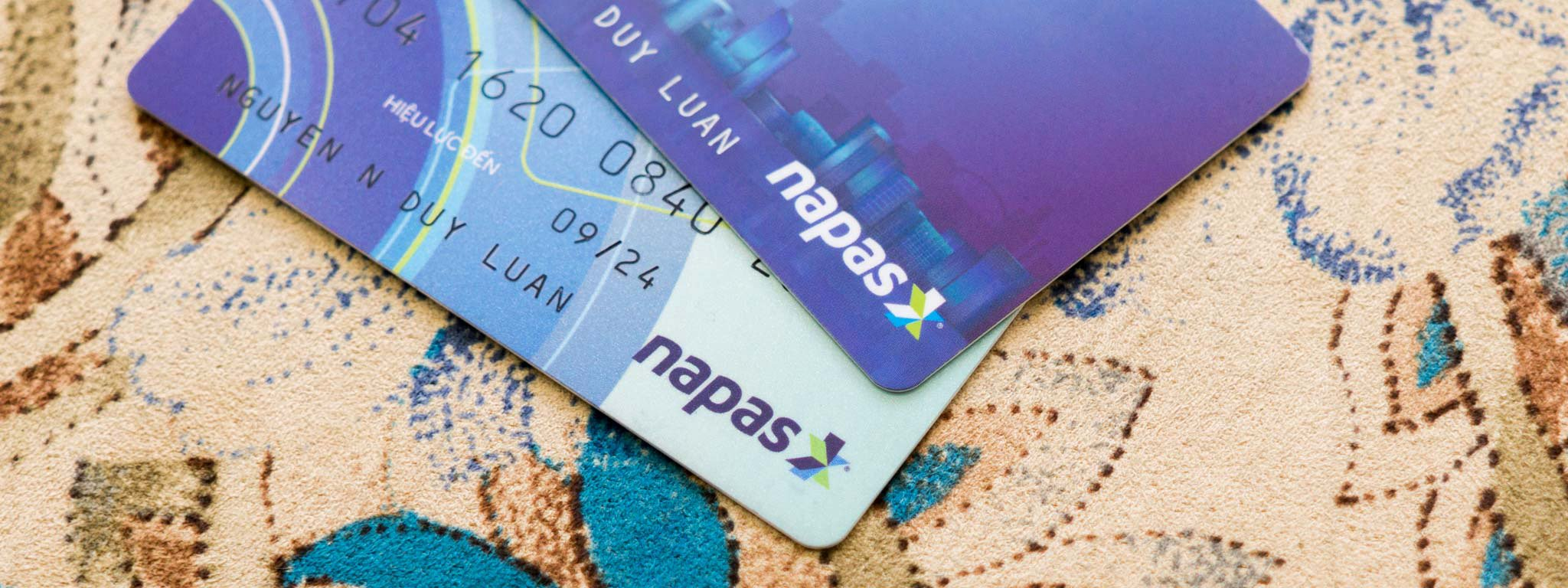
Translation COVID-19 slows down the process of converting magnetic cards to chip cards
Due to the impact of the COVID-19 epidemic, the roadmap for conversion of magnetic cards to chip cards is currently significantly affected, which may be difficult to achieve as planned. Chip card technology using base standards (VCCS) is being invested by banks to focus on safety and integration of utilities for customers when using. However,
Details
Payment trends Contactless card to the throne
With many utilities and high security, contactless cards (contactless cards) are forecast to be the payment trend in the near future, especially in the context of COVID-19 epidemic situation is complicated and concerns. about spreading the disease when using cash The World Health Organization (WHO) recommends using contactless payment – contactless or using smartphone applications
Details
MB can apply Contactless contactless technology
Military Commercial Joint Stock Bank (MB) said that the bank has officially issued a line of domestic debit cards that apply the basic standards of domestic chip cards VCCS. Specifically, according to information from MB, strictly comply with the State Bank’s Circular 41/2018 / TT-NHNN on supplementing the basic standard regulations (VCCS) on chip cards
Details
Reducing international card fees will promote non-cash payments in Vietnam
According to the Vietnam Banking Association, currently, Vietnamese banks are paying for Visa and MasterCard 3-4 fees per transaction. The situation of “superposition charge” partly affects the card business of banks, hindering the process of promoting non-cash payment. According to statistics, currently Vietnamese banks are paying for Visa, MasterCard 3-4 charges per transaction. The situation
Details
Ensuring Vietnam’s digital payment security
Payment boom without cash In recent years, Vietnam has seen an explosion of cashless payment methods, including credit cards, Internet Banking, e-wallets and other digital payment applications. Vietnamese consumers are increasingly actively accepting digital payments because of the convenience and speed of payment, so this payment method is used more frequently in direct door-to-door transactions.
Details